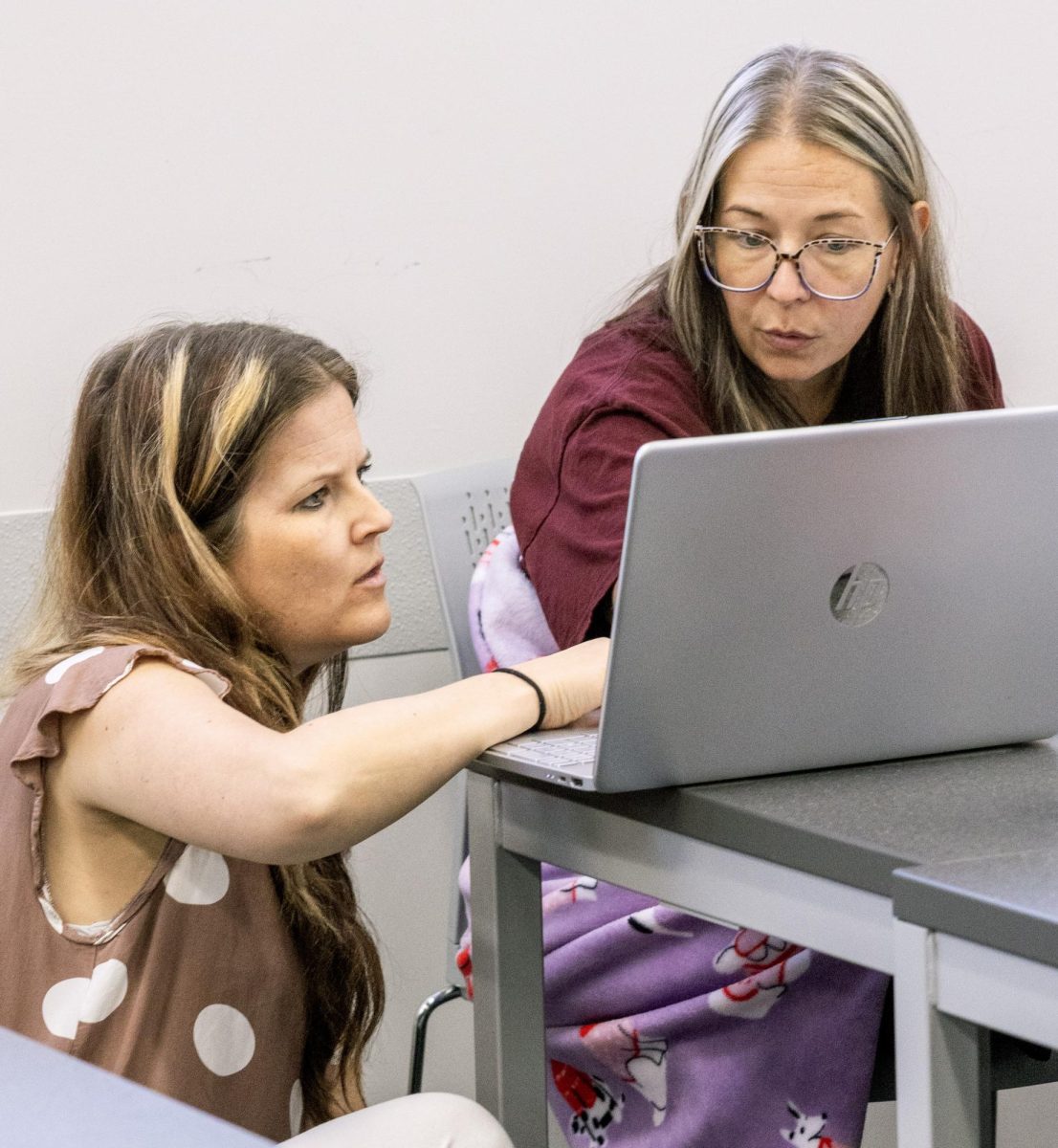
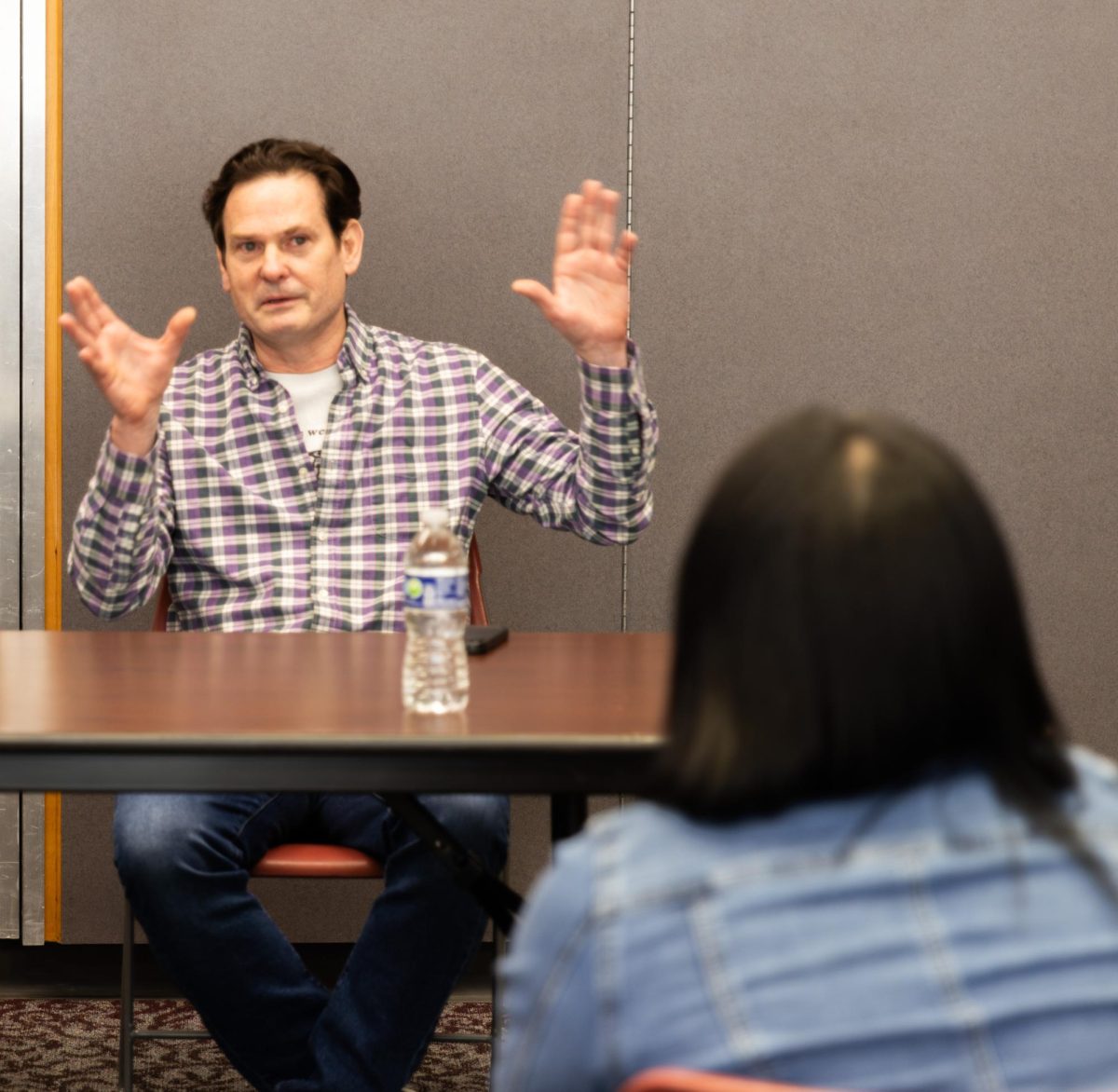
After years in clinical practice and school psychology, Dr. Kathryn Bangs has turned her focus to the classroom at John A. Logan College, where she is applying real-world experience to reshape the psychology program. From updating course pathways and aligning them with current research to organizing a new psychology club driven by student interests, Bangs is working to close post-COVID gaps in the workforce while helping community college students chart their own paths into the field. Volunteer Reporter Val Bensenberg sat down with Dr. Bangs to speak about her motivation to teach and revamp the psychology program.
Val: Just wanted to start off with a simple question, but what initially led you to teaching here at John A. Logan College?
Kathryn: Well, I’ve been in the field, in the actual practical field for a while, and I worked with many students in that role as well. So mostly graduate students, but I did have some undergraduate students that came and did shadowing experiences and I usually taught as like an adjunct on and off. So I’m not new to the teaching realm, but I kind of felt that with the direction since COVID, I was seeing a lot of gaps in the new workforce entering the field that needs to be addressed … I always wanted to be in teaching. That’s originally what I wanted to do, but I went, kind of fell more into practice. with teaching as an element of that. And I was like, someone needs to address some of these gaps that we’re seeing. And that’s kind of what led me back into it … then the opportunity here at John A. Logan kind of came up and I was like, oh, this would be a perfect opportunity for me to really focus in on this and kind of help not just my clients who need help, but the field in general and my colleagues who are feeling that overwhelmed since the pandemic.
Val: You were saying, about COVID and the like period in between. Was there anything that really interested you in psychology before teaching?
Kathryn: Yes, I always wanted to be in psychology ever since I was younger. I was one of those few students that knew what I wanted to major in and did just what I said. I’m kind of that rare student. I always wanted to be in psychology, and I always gravitated to working even as a kid, volunteering and working with people who had severe disabilities. And I kind of just naturally gravitated in that direction. So that’s really kind of what brought me into the field. And I liked a lot of the arts therapies. I did some dance therapy for a time, but especially in the arts world, there’s not a lot of research. I was like, okay, well, I need to be more broad, get the credentials that say, I can do all of it and then I can do kind of that as my fun part of my job. So yeah, I would say I just kind of always gravitated towards psychology and helping and it kind of led me here.
Val: Yeah, that makes a lot of sense actually. So, you were talking about being new here to John A. How has that experience been? Has that been a positive experience for you?
Kathryn: Yes, I would say it’s very positive. So, you know, going from working with extreme mental health concerns where not everyone’s a success story to kind of being in the population where if I did my job well in my previous job, they would end up here and, you know, getting They’re getting. their degrees and pursuing their dreams, and so it’s kind of like seeing all of the success stories of the people I once worked with, so that’s always a nice reminder of, like, yes, that work was hard at times, and sometimes it felt like it was …never going to be okay. And especially during COVID, we felt that. And to come here and see like, oh, these are where my success stories come and where they take their next steps after not needing me anymore. And that’s heartwarming. So, I love interacting with all my students and their great ideas and just the sparks of like this interest in all the things that they want to do with their lives. And so, yeah, I would say it’s extremely positive.
Val: That’s good to hear.
Val: I don’t know if this question is still relevant, but was there any other colleges you had in mind about teaching at, or was this just like the obvious, like the opportunity that came about?
Kathryn: Part of it was opportunity, but I’ve taught online for a few different universities. I still actually currently teach at SIU. I teach graduate students over there. And so I’m still kind of involved in other institutions. I know that SIC was looking for someone as well. But ever since I moved to this area and kind of stepped on John A. Logan’s campus, it kind of felt more of the right fit even then. And so much so that I had called my mom one of my first trainings that I ever did here and was like, this campus just has that nice feel to it. And I love a lot of their mission that they have here at the college. And it’s just so different than some of the other community colleges. And while I could work at a four-year institution, that’s not really where my heart is. I really do like more community-based type of work and connecting with the people who are really doing kind of all these amazing things in their lives and kind of somehow managing all of that at the same time. And four-year institutions can make that very difficult for some people. They have families and they have jobs, and they’re trying to further their careers and juggling all of these numerous things that they are. I think community colleges do a wonderful job supporting students like that, and that speaks more to my passion than being like, your only focus is school. And not all four-year institutions are like that, but I just have a bigger pull towards the community college mission than I do a four-year institution, even though I still am involved in some four-year institution things. Yeah, I think this just fits more of my background as a clinician. And I’m a school psychologist, so it has the education side. People with learning disabilities often go to community colleges first and kind of test the waters out. I think It kind of takes all of the skills that I have professionally and practically and kind of brings them all in one space. So for me, this just seemed like the best fit rather than other places.
Val: I totally understand that. I was just wondering, so you’ve talked a lot about like coming into this program and everything. What has been your favorite aspect of the program and just teaching here?
Kathryn: Oh man … I love the actual teaching. I love seeing like the light bulb moments. I think I had it easy as, you know, psychology is kind of one of those things that everyone interacts with. You know, they don’t may not take a course in it. However, psychology is in their world. Like it’s, they deal with it every day. They’re people. So they deal with psychology. You know, kind of explaining a phenomenon and then being like, oh, that’s why I do that. I mean, that’s always fun and be like, yeah, like it happens to everybody. it’s just kind of one of those fun subjects. I have more of those like little aha type moments than maybe some other courses have. Not that they don’t have their moments, I think it’s just easier in some ways for psychology. That’s always fun and interacting with students is always fun. But one of the things that I’ve been doing is kind of looking at our overall program structure and our curriculum and really trying to take it to the next level and making sure that we have everything to offer our students to make them as successful as possible when they go on to four-year degrees or beyond, if they so choose. I really am liking kind of looking at that programmatic scheme, which no one gets to see me do. It’s what I do sitting here in my office all by myself. No one’s seeing me do that, but I really do like piecing apart and looking at the research of, oh, what does this institution do? Or what does APA recommend for this? And kind of putting this big puzzle together. It’s a lot of work, but it’s also exciting. And it brings me a lot of hope for the opportunities for our students. I really like that aspect, which totally speaks to my school psychologist side. We love program development, program improvement. It’s work that I have done historically, but just kind of in this new realm, as it were, which is new and not new at the same time in some ways. I’ve been really enjoying that and trying to learn all the ins and outs of what John A. Logan needs, what the state requirements are, trying to balance all those things. It’s just a fun puzzle. It’s going to take me a while, but it’s a fun puzzle.
Val: Yeah! Is there anything like personal you’d like to share about yourself or just anything like involving the program?
Kathryn: I think the newest thing, one of the things I was working on today was I had been asked to put together a psychology club and I have some student interests. So now we’re going to start putting that together and figuring out what that’s going to look like. So I’m excited for that opportunity. and for students to kind of spearhead what that looks like with me. I’m not going to determine what it looks like. I’m going to have the students determine what that looks like. And so that’s an exciting part that I’ve been working on today. I finally got enough students to be like, yeah, I’m going to sign it and agree to help put that together. So that’s kind of the newest thing right at this moment that’s going to be happening, anything about myself I don’t even know. My students probably would have ideas I would not have any clue what to do. I use personal examples as different things throughout my classes.
Val: Oh, I love that.
Kathryn: It’s kind of a little mantra. I kind of believe like, it’s just kind of a reminder of like, there are people who are always going to say, you can’t. achieve your dream. And so that’s, prove them wrong. You can achieve your dream. It may not be the path that everyone else takes, but you can get there. And I believe that any of my students can get to wherever they want to go, and we just have to figure out what path is the one that they need to take for that. So they do like that sign. I’ve had several students who’ve been in here that like that. So I think they would say my sign on my wall. That’s all I can think of, unless there’s something you think of.
Val: No, I don’t think so. I think that’s good, honestly. Well, I think we can probably wrap up the interview, if you’d like.
Kathryn: Yeah, well, it’s up to you. You can ask me more questions if you like.
Val: I’m not sure if I have anything else at this moment but thank you so much. Oh, of course. And it’s been really good talking to you!